A reefer is a shipping container with its own refrigeration unit, holding any set point from -30°C to +30°C. The word is the trade’s short name for a refrigerated container, so the two terms describe the same box. Its walls, roof, floor and doors are insulated, the refrigeration machinery sits in the front wall, and the body is built and tested to ISO 1496-2, the international standard for thermal containers. That sets it apart from a refrigerated truck, whose unit belongs to the trailer, and from a built cool room, which is panels and plant fixed inside a building. Shipping lines carry reefers for imported fruit and exported meat. On an Australian site, the plain answer to what is a reefer container is a portable cold store with its own plant: it arrives on a truck, plugs into a 32 A outlet and moves again when the job ends.
Shipping Containers
Reefer Containers: How They Work, Sizes and Power
Summary
Reefer containers are insulated shipping containers with their own refrigeration unit, holding any set point from -30°C to +30°C. Common sizes run from the 10ft through the 20ft to the 40ft high cube, and each runs from a 32 A three phase supply, with 240 V single phase units made for sites without three phase. In Australia most of them work as cold stores on land, beside camp kitchens and at food producers, events and clinics, rather than as freight boxes on ships. SCS Australia sells new units in every size, listed in our range of refrigerated containers.
This article sits alongside our Refrigerated Containers range.

The short answer to how does a reefer container work is airflow: the unit blows chilled air under the load through the aluminium T-section floor and draws it back across the top of the stock. The reefer container refrigeration system is a closed loop in the front wall. The compressor pumps refrigerant to the condenser, which sheds the heat outside, and the refrigerant then expands through the evaporator coil, where fans push air from the load space across it. A microprocessor controller holds the set point, records the temperature for food safety logs and defrosts the coil automatically. An adjustable vent lets in fresh air for produce, up to 250 m³/h on a 40ft. Loading matters as much as the plant: stock must not cover the floor channels, and clear space under the roof lets the air return to the unit. Block either path and parts of the load warm while the unit keeps running.
The types of reefer containers in use come down to six, and most site buyers need only the first.
- Integral reefer: the standard box, with its own unit in the front wall, holding -30°C to +30°C.
- Pallet-wide reefer: about 2,500 mm wide outside instead of 2,438 mm, so two Australian pallets fit side by side.
- Blast freezer: extra plant and airflow to pull fresh product down to frozen quickly, sized to the product.
- Super-freezer: built to hold -60°C, far colder than a standard unit.
- Controlled atmosphere: adjusts oxygen and carbon dioxide to slow the ripening of fruit on long export voyages.
- Insulated container: no unit at all. Some are old reefers with the machinery removed, sold as non-operating reefers, and others are new boxes lined with insulation panels. Either slows temperature change but holds no set point.
For cold storage on an Australian site, the integral reefer covers almost every job.
Reefer container dimensions follow the ISO sizes outside, but the inside is shorter and narrower than a dry box of the same size. The refrigeration unit takes about 450 mm of length in a 20ft and the foam walls take width and height, so a 20ft reefer is about 5,460 mm long inside against 5,902 mm in a new 20ft dry container. The common reefer container sizes are set out below, and dry box figures are on our shipping container dimensions page.
Reefer container dimensions and specifications
| 10ft | 20ft | 20ft high cube | 40ft high cube | |
|---|---|---|---|---|
| Outside (L × W × H) | 2,991 × 2,438 × 2,591 mm | 6,058 × 2,438 × 2,591 mm | 6,058 × 2,438 × 2,896 mm | 12,192 × 2,438 × 2,896 mm |
| Inside (about) | 2,390 × 2,292 × 2,310 mm | 5,460 × 2,292 × 2,310 mm | 5,380 × 2,280 × 2,540 mm | 11,580 × 2,290 × 2,550 mm |
| Door opening | 2,228 × 2,251 mm | 2,288 × 2,251 mm | Confirmed at quote | 2,290 × 2,570 mm |
| Capacity | About 12.7 m³ | 28.9 m³ | About 31 m³ | 67.6 m³ |
| Tare | 2,060 kg | 2,770 kg | About 2,980 kg | 4,360 to 4,650 kg |
| Australian pallets | 2 | 4 | 4 | 9 |
Reefer container capacity in the table is the internal volume of a reference build, and each build varies by a few millimetres. A high cube body, 2,896 mm tall, adds about 230 mm of inside height to the 20ft, and the 40ft high cube’s 2,570 mm door clears taller stacks than the 2,251 mm door on standard-height units. Under ISO 668:2020 the gross rating for both the 20ft and the 40ft high cube is 36,000 kg, while new 20ft units are commonly plated at 22,000 to 24,000 kg, and the plate on each unit gives its own figure.
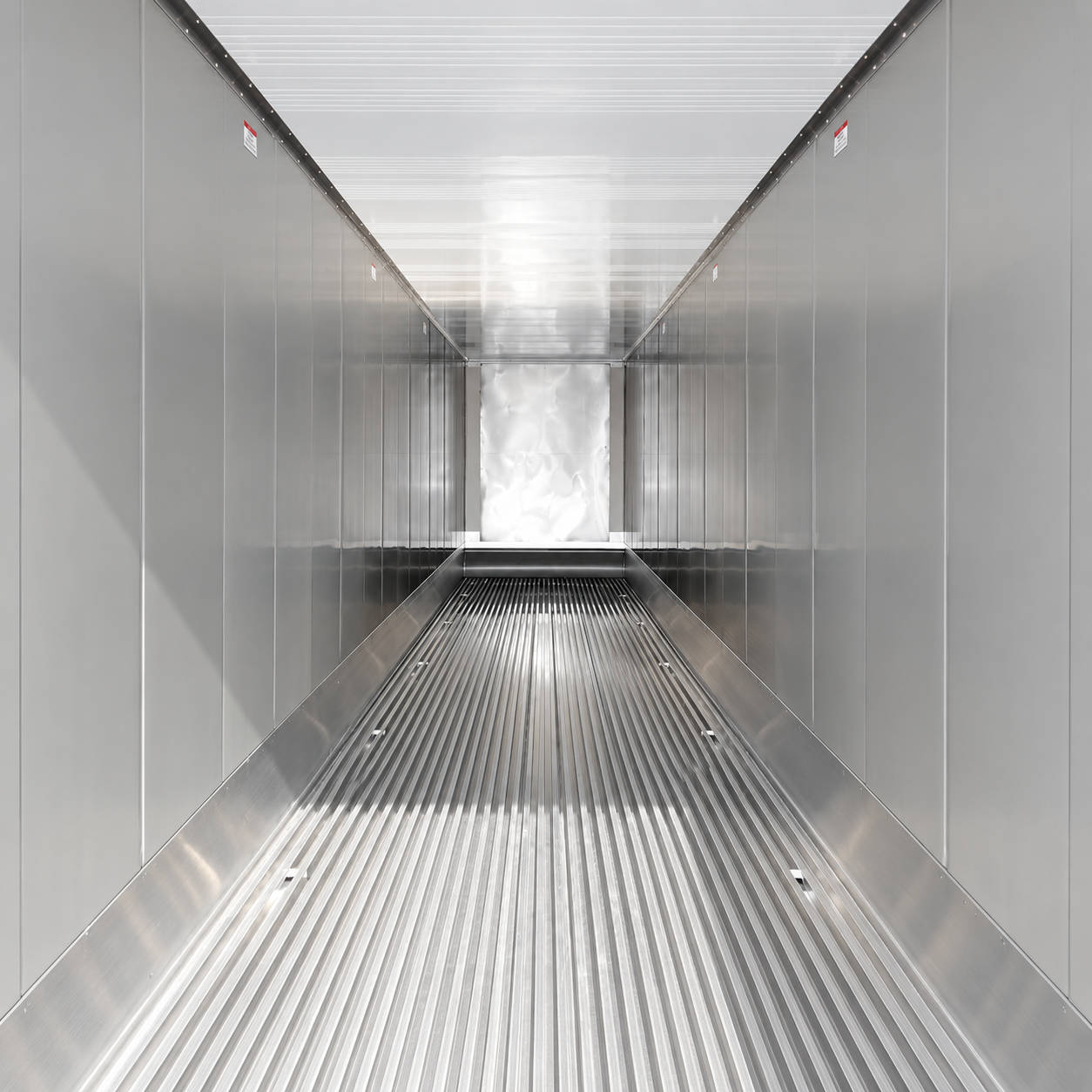
A standard reefer takes Australian pallets one row deep: two in a 10ft, four in a 20ft and nine in a 40ft high cube. An Australian CHEP pallet is 1,165 mm square, so two side by side need 2,330 mm, and a reefer is only about 2,290 mm wide inside. That is why reefer container pallet capacity on Australian sites runs lower than the trade tables, which quote about 10 for a 20ft and 22 for a 40ft high cube: those counts use smaller European pallets (1,200 × 800 mm). A pallet-wide reefer, about 2,500 mm wide outside and 2,375 mm inside, fits two Australian pallets side by side. Whatever the pallet, keep the load clear of the T-section floor channels and leave space under the roof, or the air cannot circulate through it. Stacked cartons on a pallet need the same gap at the top.
Chilled food must stay at 5°C or below, and a reefer holds any set point between -30°C and +30°C, so one unit covers every food band. The FSANZ temperature control rules set that 5°C limit for potentially hazardous chilled food, under Standard 3.2.2 of the Food Standards Code, and require frozen food to stay frozen. In practice, fruit, vegetables, dairy and drinks sit at +1°C to +8°C, while frozen meat, seafood and ice are held at -18°C to -25°C. The upper end of the reefer container temperature range has its uses too, for goods such as wine and chocolate that are kept cool rather than cold. A reefer is built to hold temperature, not to pull warm stock down fast, so load product at or near its set point and use a blast freezer when fresh product must freeze quickly. The controller’s temperature log gives a food business a record for its food safety program.
A reefer needs a dedicated 32 A three phase supply from an outlet a licensed electrician has installed to AS/NZS 3000. The unit runs on 380 to 460 V at 50 or 60 Hz. The international reefer plug is a 32 A, 4-pin plug (three phases and earth) to IEC 60309-2, and Australian suppliers often fit a 5-pin plug to suit local outlets, so match the outlet to the plug on the unit’s lead. Reefer container power requirements are much the same across sizes: 10ft, 20ft and 40ft high cube units all take that 32 A three phase supply. On amps, plan for a 32 A circuit for each unit. The reference unit draws up to 13.5 kW at its peak and far less once the load is at temperature. Sites with no three phase supply can use a 240 V single phase unit built for it, usually with a narrower set-point range, so check that range against your goods before ordering. Two or more reefers need a circuit each, which is worth raising with the electrician before delivery day.

A reefer uses about 3 to 7 kWh an hour, more on hot days and at colder set points. Over a day, reefer container power consumption comes to about 70 to 100 kWh for a 20ft held at +4°C and about 140 to 170 kWh for a 40ft high cube at -18°C, with 25 to 40% more through a hot summer. Shade over the unit and about 1.2 m of clear air around it bring those figures down. Where there is no grid supply, a diesel genset runs the unit, either clipped onto the front or mounted underneath, and off-grid sites can also look at solar powered shipping containers as a power source. The refrigerant circuit is sealed, and in Australia only technicians with an ARC licence may work on it. Most units run on HFC refrigerants, which Australia is reducing under its HFC phase-down, so ask which gas a unit uses.
The reefer container vs dry container choice comes down to space, weight and power. A 20ft reefer gives up about 450 mm of length and 60 mm of width to its unit and foam walls, so it holds 28.9 m³ against about 33.2 m³ in a new 20ft general purpose container, and its inside height drops from 2,393 mm to about 2,310 mm. The stainless lining, T-section floor and machinery add weight: a new 20ft reefer weighs about 2,770 kg empty against 2,200 kg for the dry box. A reefer also needs power the whole time it holds stock. A dry container suits anything that tolerates heat, and an insulated box suits goods that only need steadier temperatures with no set point. When the real choice is between a reefer or a built cool room, our comparison sets out when each one suits.
FAQ
Questions About Reefers
What is a refrigerated container called?
It is usually called a reefer, the trade’s short name for a refrigerated container. The reefer container meaning is specific: an insulated ISO container with its own refrigeration unit, built and tested to ISO 1496-2. An integral reefer has the unit built into its front wall, and an insulated container with no unit is not a reefer at all.
What are reefer plugs?
Reefer plugs are the 32 A three phase plugs on a reefer’s power lead, rated for 380 to 460 V: internationally a 4-pin plug (three phases and earth) to IEC 60309-2, and in Australia often a 5-pin plug to suit local outlets. The site needs a matching outlet on a dedicated circuit, installed by a licensed electrician to AS/NZS 3000.
Does a reefer container need a genset?
Only where there is no suitable power. On a site with a 32 A three phase outlet, or a single phase unit matched to the supply, no genset is needed. Off-grid camps, remote farms and road transport use a diesel genset, clipped to the front of the unit or mounted under it, sized to the unit’s peak draw.
What temperature should a reefer be set at?
That depends on the goods. Chilled food is held at +1°C to +8°C, and the FSANZ limit for chilled, potentially hazardous food is 5°C or below. Frozen goods sit at -18°C or colder, usually -18°C to -25°C. Load stock at or near its set point, because a reefer holds temperature rather than pulling warm stock down quickly.
How wide is the inside of a reefer container?
About 2,290 mm in a standard 20ft or 40ft, and about 2,280 mm in a 20ft high cube, against 2,352 mm in a new 20ft dry container. The insulated walls take that width, which is why Australian pallets fit one row deep. A pallet-wide reefer gives about 2,375 mm inside, enough for two Australian pallets abreast.
Can you keep a reefer outside in the sun?
Yes. Reefers are built to run in outside air up to +50°C, and most on Australian sites stand outdoors. Running use climbs with the heat, by 25 to 40% through a hot summer on a 40ft, so shade over the unit and about 1.2 m of clear air around it cut its running time.
Related pages
More guides and products
The Refrigerated Containers range this article relates to, and more articles.
Refrigerated Containers
The range this article relates to. Browse the range or call 1300 727 269 for a quote.
Explore Refrigerated Containers
Cold Room Container vs a Built Cool Room
Cold room container or a built cool room? Cost, set-up time, power and off-grid use compared, with the cases…
Read more
DNV Reefer Containers
DNV reefer containers: 10ft offshore reefer containers to DNV 2.7-1, -25°C to +25°C, certified lifting set,…
Read more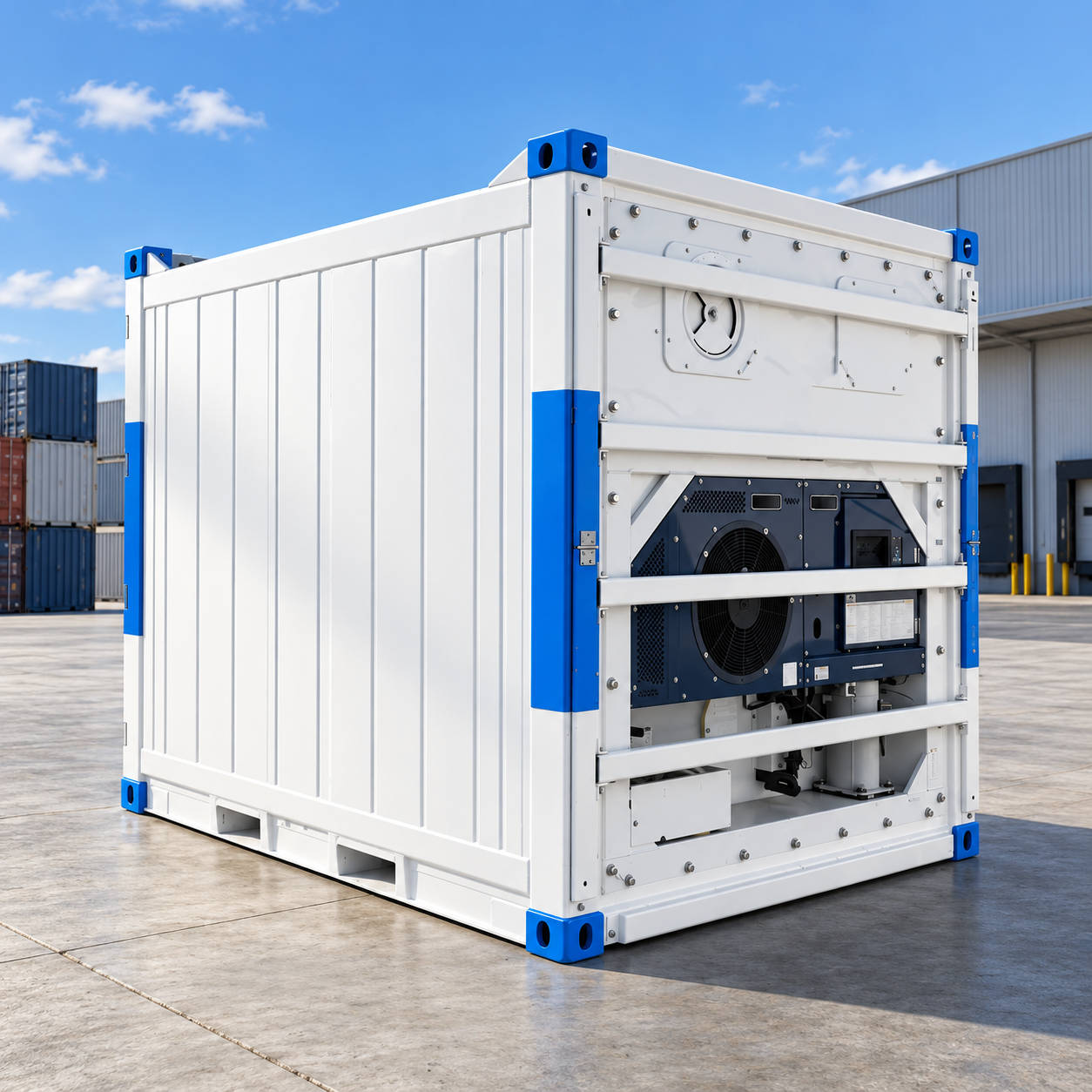
Next step
Ready to talk about your project?
Call 1300 727 269 or send an enquiry. Our Newcastle team will come back with pricing, delivery options and lead times for your site.